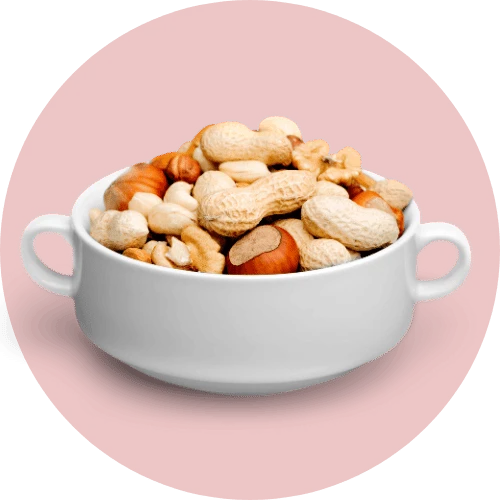

Direct answer: The best dry fruits for children are almonds, walnuts, cashews, pistachios, dates and raisins — in small, age-appropriate portions. Almonds support brain development, walnuts provide healthy fats, cashews and pistachios add protein and energy, and dates and raisins give natural energy. Children aged 5 and above can eat whole nuts; younger children need chopped, ground or soaked nuts because whole nuts are a choking risk. A small daily portion — a few almonds and a couple of dates, or a small box of mixed nuts — is enough.
Children need energy, protein, healthy fats, iron, calcium and zinc to grow, learn and stay active. Dry fruits provide all of these in a small, portable snack. A handful of nuts in a lunchbox is more nutritious than a packet of biscuits or crisps, and it keeps a child full for longer.
Dry fruits also help with concentration at school. Almonds and walnuts are rich in nutrients linked to brain health, and a steady snack in the morning helps a child stay focused until lunch. Dates give quick energy before sports or play. The key is the right dry fruit, the right portion, and the right form for the child's age.
Almonds are the most popular dry fruit for children in Pakistan, and for good reason. They are rich in vitamin E, magnesium and healthy fats that support brain development. Soaked almonds are the traditional choice: soak 3–5 almonds overnight, peel them in the morning, and give them with breakfast or milk. For older children, raw or lightly roasted almonds are fine too.
Walnuts are one of the best sources of plant omega-3 fats, which support brain development. They are soft enough for children to chew easily. Give a small handful of walnut kernels — two or three halves — a few times a week. Chop them into porridge, yoghurt or desserts if your child does not like them plain.
Cashews are creamy, mild and easy for children to eat. They provide protein, zinc and magnesium, and they are filling without being heavy. A few cashews a day (4–5 pieces) is a good portion. Avoid honey-roasted or sugar-coated cashews — plain cashews are the healthier choice.
Children love pistachios, especially in shell — shelling them is fun and slows down eating, which helps with portion control. Pistachios are rich in protein and fibre. Choose unsalted pistachios and give a small handful. For younger children, use shelled pistachios and chop them if needed.
Dates are sweet, soft and easy to eat, and children usually love them. They provide iron, potassium and quick energy, which is ideal before school or sports. One or two dates a day is enough for most children. Chop dates into small pieces for younger children, and avoid giving whole dates to toddlers.
Raisins are small, sweet and easy to carry, and they are a good source of iron. A small spoonful (about a tablespoon) is a good portion. Raisins are sticky, so remind your child to brush their teeth after eating them. Mix raisins with nuts to make a small trail mix for the lunchbox — see our dry fruit guides for a home-made trail mix recipe.
Portion size matters more than the type of dry fruit. A child's stomach is small, and dry fruits are calorie-dense. As a general guide: ages 2–4, a tablespoon of chopped or ground nuts or one small date; ages 5–8, 3–5 almonds or a small handful of mixed nuts (about 15 grams); ages 9–12, a small handful (about 20–25 grams); teenagers, a full small handful (about 30 grams). These are general guides — your child's doctor can advise for your child specifically.
Give dry fruits as a snack, not as a meal replacement, and not late at night. The best times are with breakfast, in the lunchbox, or as an after-school snack. A small box of mixed nuts in the lunchbox is one of the easiest healthy habits you can build.
Whole nuts are a choking risk for children under five. For young children, always chop, grind or soak nuts, or give them as nut powder mixed into milk, porridge or yoghurt. Never give whole nuts, whole dates or whole grapes to a toddler, and never let a young child eat nuts while running or lying down.
Nut allergies can be serious. If your child has never eaten a particular nut, introduce it in a tiny amount at home first, and watch for any reaction — rash, swelling, stomach pain or breathing trouble. If any of these appear, seek medical help immediately. If your child has a known nut allergy, do not give them that nut at all, and tell the school. Always check with your doctor before introducing nuts to a child with allergies in the family.
Many children refuse plain nuts. The trick is to mix them into foods they already like. Add chopped almonds or walnuts to porridge, cereal or yoghurt. Blend dates into milk for a natural milkshake. Make a small trail mix with nuts, raisins and a few chocolate chips for the lunchbox. Add cashew powder to roti dough or to a smoothie. Make energy balls from dates, nuts and a little cocoa — no cooking needed.
Soaked almonds with milk in the morning is the classic Pakistani habit, and it works because it is simple and repeatable. Start with one habit, do it every day, and add variety slowly.
Buy fresh, whole, clean dry fruits from a trusted store. Children are more sensitive to stale or mouldy food than adults, so quality matters even more. Check the smell and look of every pack, store dry fruits in an airtight jar, and finish them within a few weeks. Buy from a store with real reviews, clear photos and a replacement policy for stale stock — you can browse trusted options at KPK Collection and read our guide on how to buy dry fruits online safely. For storage, see our guide on how to store dry fruits at home.
Almonds, walnuts, cashews, pistachios, dates and raisins are the best choices. Almonds support the brain, walnuts provide healthy fats, cashews and pistachios add protein, and dates and raisins give natural energy. Give them in small, age-appropriate portions.
Children aged 5–8 can eat 3–5 almonds a day; older children can eat 5–8. Soaked almonds are the traditional choice. The portion should be small — a few almonds, not a bowl.
No. Whole nuts are a choking risk for children under five. Give chopped, ground or soaked nuts instead, or mix nut powder into milk, porridge or yoghurt. Always supervise young children while they eat.
Yes, dates are good for children in small amounts — one or two dates a day gives iron, potassium and quick energy. Chop them for younger children. Dates are sweet, so remind your child to brush their teeth afterwards.
A small box with a few almonds, a few cashews, some raisins and one chopped date is ideal. It is filling, portable and nutritious. Add a few pistachios in shell for older children. Keep the box small so the portion stays measured.
Yes, nut allergies can be serious. Introduce each new nut in a tiny amount at home first and watch for any reaction. If your child has a known nut allergy, avoid that nut completely and inform the school. Consult your doctor if you are unsure.


All the power of niche in your pocket. Schedule, publish and monitir your accounts with ease.