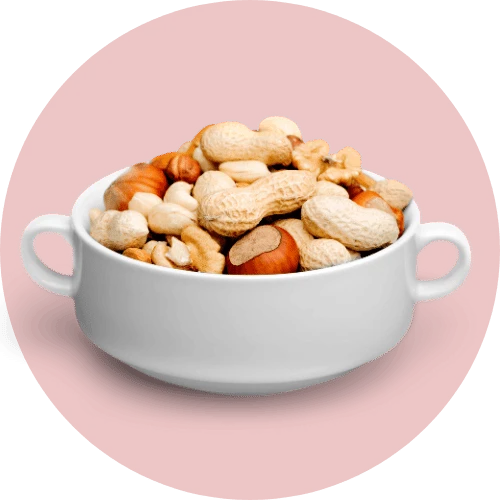

Direct answer: People with diabetes can eat dry fruits, but the choice and the portion matter more than the dry fruit itself. Tree nuts like almonds, walnuts, pistachios and cashews are generally the safer choices because they are low in sugar and rich in healthy fats and fibre. Dates, raisins and other sweet dried fruits raise blood sugar quickly, so they should be eaten rarely and in very small amounts. Always eat measured portions and follow your doctor's advice — this guide is general information, not medical advice.
Diabetes means the body has trouble controlling blood sugar. Foods that are high in natural sugars raise blood sugar fast, while foods high in fibre, healthy fats and protein raise it slowly. Dry fruits sit on both sides of this line: nuts are mostly fat and fibre with very little sugar, while dried fruits like dates and raisins are concentrated sugar.
That is why a handful of almonds and a handful of dates are not the same thing for a diabetic person, even though both are called dry fruits. The first is a slow, steady snack; the second is a quick sugar hit. Knowing the difference is the key to enjoying dry fruits safely with diabetes.
Portion size is the other half of the story. Even the safest nuts are calorie-dense, and eating a large bowl every day can lead to weight gain, which makes diabetes harder to control. A small measured portion — a handful, not a bowl — is the right approach.
Almonds are one of the best dry fruits for people with diabetes. They are low in sugar, high in fibre and magnesium, and they help you feel full. A small portion of 6–8 soaked or raw almonds a day is a good snack. Avoid almonds coated in sugar or honey.
Walnuts are rich in plant omega-3 fats and fibre, with very little sugar. They are a good choice for heart health, which matters for diabetics because diabetes increases heart risk. A small handful of walnut kernels a day is enough.
Pistachios are high in protein and fibre and low in sugar. They are filling and slow to eat in shell, which helps with portion control. Choose unsalted pistachios — salted ones add sodium, which is not good for blood pressure. A small handful (about 25–30 grams) is a reasonable portion.
Cashews are slightly higher in carbohydrates than almonds or walnuts, but they are still a reasonable choice in a small portion. Keep the amount small — a few cashews, not a full bowl — and avoid honey-roasted or sugar-coated cashews.
Dates are the hardest dry fruit for diabetics. They are nutritious — rich in iron, potassium and fibre — but they are also very high in natural sugar, and their sugar enters the blood quickly. One or two dates occasionally, eaten with nuts or after a meal, is very different from eating five or six dates on an empty stomach. Many doctors advise diabetics to avoid dates or keep them to a rare, tiny portion. Follow your own doctor's guidance.
Raisins are concentrated sugar: a small box contains as much sugar as a much larger amount of fresh grapes. Dried figs are similar. Both can be eaten in a very small amount — a spoonful, not a bowl — and are best eaten with nuts or yoghurt, which slow the sugar down. They should not be a daily snack for a diabetic person.
Avoid dry fruits coated in sugar, honey, chocolate or syrup. These add fast sugar on top of the fruit's own sugar. Plain, unsweetened, uncoated dry fruits are always the safer choice.
Eat dry fruits with a meal or with another food, not alone on an empty stomach. A few almonds with breakfast, or walnuts mixed into yoghurt, raise blood sugar more slowly than the same nuts eaten alone between meals. Pairing nuts with protein or fibre is a simple, effective habit.
Measure your portion instead of eating from the jar. A small handful is about 25–30 grams — roughly a shot-glass full. Pre-portion your daily nuts into a small box each morning so you do not eat more without noticing.
Check your blood sugar after trying a new dry fruit, and note how your body responds. Everyone's diabetes is different, and your own readings are more useful than any general list. Share the results with your doctor at your next visit.
Choose whole, fresh, unsalted and unsweetened dry fruits. Stale or rancid nuts are bad for everyone, and sweetened ones defeat the purpose. Buy from a trusted store and store them properly — our guide on how to store dry fruits at home explains how to keep them fresh for months.
One common myth is that all dry fruits are bad for diabetes. That is not true — plain nuts in measured portions can be part of a healthy diabetic diet. Another myth is that dates are safe because they are natural. Natural sugar is still sugar, and dates raise blood sugar fast. A third myth is that diabetic-friendly snacks can be eaten in any amount. Even healthy nuts are calorie-dense, and the portion still matters.
Another mistake is trusting a product because the packet says "sugar-free" — check whether it is sweetened with something else, and check the total carbohydrates. Always read the label and ask your doctor if you are unsure.
Breakfast: 6–8 soaked almonds with your usual breakfast. Mid-morning: a small handful of walnuts with a cup of green tea. Evening: a few unsalted pistachios with yoghurt. This is an example only — your own plan should come from your doctor or dietitian, based on your medicines, your blood sugar readings and your weight.
Yes, in measured portions. Plain tree nuts like almonds, walnuts, pistachios and cashews are generally safer because they are low in sugar. Sweet dried fruits like dates and raisins should be limited to very small amounts. Always follow your doctor's advice.
Dates are high in natural sugar and raise blood sugar quickly. One or two dates occasionally, eaten with nuts or after a meal, is very different from eating several dates on an empty stomach. Many doctors advise limiting or avoiding them — follow your own doctor's guidance.
Almonds and walnuts are usually the best choices: low in sugar, high in fibre and healthy fats, and filling in small portions. Pistachios are also a good option if unsalted. The best choice for you depends on your own blood sugar readings and your doctor's advice.
A common portion is 6–8 almonds a day, but the right amount depends on your diet, medicines and blood sugar control. Measure your portion, check your readings, and ask your doctor what suits you.
Raisins are concentrated sugar, so they raise blood sugar quickly. A very small amount — a spoonful — eaten with nuts or yoghurt is different from a bowl on its own, but raisins should not be a daily snack for most diabetic people.
Not necessarily all, but sweet dried fruits need strict portions. Dates, raisins, dried figs and sweetened nuts should be rare and tiny in amount. Plain nuts are the safer everyday choice, and your doctor can set the exact limits for you.
Note: This article is general information only and is not medical advice. If you have diabetes, please consult your doctor or dietitian before changing your diet.


All the power of niche in your pocket. Schedule, publish and monitir your accounts with ease.